


كلمة الشّيخ محمّد المأمون القاسميّ الحسنيّ، وزير الدّولة، عميد جامع الجزائر،
بمناسبة إشرافه، مساء يوم الجمعة 26 ذي الحجّة 1447هـ، الموافق 12 جوان 2026م،
بمركز أوكسفورد للدّراسات الإسلاميّة بلندن،
على مراسم توقيع اتّفاقيّة إنشاء برنامج “كرسيّ الأمير عبد القادر”.
﷽
الحمد لله ربّ العالمين؛ والصّلاة والسّلام على المبعوث رحمة للعالمين،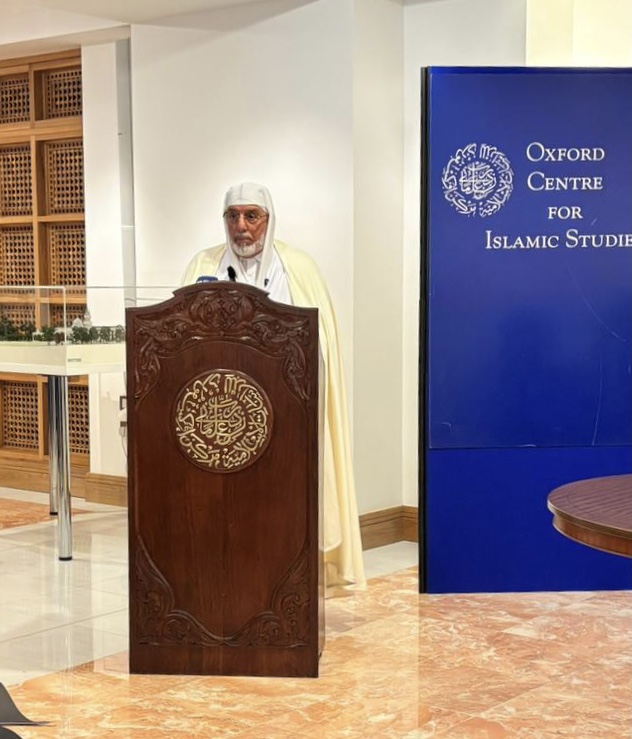
سيّدنا ونبيّنا محمّد، وعلى آله وصحبه أجمعين.
أصحاب المعالي والسعادة؛
السيّد مدير مركز أكسفورد للدّراسات الإسلامية المحترم؛
حضرات السّادة والسيّدات العلماء والباحثين؛
أسرة الإعلام؛
الحضور الكريم، كلّ باسمه ومقامه.
السّلام عليكم ورحمة الله وبركاته، وبعد؛
فيسرّني أن أشارككم هذا اللّقاء العلميّ المتميّز الذي يشهد إطلاق كرسيّ الأمير
عبد القادر، في صرح أكاديميّ مرموق، استطاع، على مدى عقود، أن يؤسّس مساحة رفيعة للحوار، بين التقاليد الفكرية الإسلامية، والمدارس العلمية العالمية؛ وأن يجعل من المعرفة جسرا للتّفاهم بين الشعوب والثقافات.
وإذا كانت الأمم تُعرَف أحيانا برجالها الكبار، فإنّ بعض العظماء يتحوّلون، مع الزمن،
إلى مدارس فكريّة قائمة بذاتها، يتجاوزون حدود أوطانهم وأزمنتهم، ليدخلوا في الرصيد المشترك للإنسانية. والأمير عبد القادر الجزائريّ من هذه النّماذج النّادرة: فهو في الوعي الجزائريّ أكبر من مجرّد رجل من شخصيّات التاريخ الوطنيّ؛ وإنّما هو أحد المؤسّسين الكبار للفكر الجزائريّ الحديث؛ وأحد الرّموز الّتي تبلورت حولها معاني الدولة، والشرعية، والوحدة، والانتماء.
لقد واجه الأمير عبد القادر ظرفا تاريخيّا بالغ التعقيد: حيث كان عليه أن يصون هُوّية مجتمع مهدّد في وجوده؛ وأن يؤسّس في الوقت نفسه نظاما سياسيّا وإداريّا قادرا على الاستمرار. ومن هنا تبرز تجربته الفريدة؛ إذ لم ينشغل فقط بالجهاد وقيادة المقاومة، وإنّما انصرف كذلك إلى بناء مؤسّسات الحكم، وتنظيم الإدارة والمالية والقضاء، والعلاقات الخارجية؛ وإرساء صورة للدّولة، تتجاوز منطق العصبيّة المحلّيّة، إلى أفق الجماعة الوطنيّة الجامعة. ولهذا ظلّ حضوره في الذاكرة الجزائرية حضورا تأسيسيًّا، مرتبطا بمعاني الدّولة، بقدر ارتباطه بمعاني الجهاد والتّحرير.
إنّ أهمّيّة هذا الكرسيّ العلميّ تنبع من كونه يدعونا إلى قراءة الأمير عبد القادر قراءة أوسع من السّرد العسكريّ: فالرّجل ترك تراثا فكريّا وروحيّا عميقا، ما تزال أسئلته حيّة في عالمنا المعاصر؛ وقد كان واسع الاطّلاع على العلوم الإسلامية، متّصلا بتراث الفلسفة والتصوّف، منفتحا على الثقافات المختلفة، مؤمنا بأنّ المعرفة سبيل للارتقاء بالإنسان،
وأنّ العمران لا يقوم إلّا على التوازن بين القوّة والأخلاق، وبين السّلطة والحقّ، وبين الانتماء الخاصّ والانفتاح الإنسانيّ.
ومن هنا، فإنّ دراسة الأمير اليوم ليست استعادةً لذكرى تاريخيّة فحسب، وإنّما هي بحث في أنموذج فكريّ، قادر على الإسهام في معالجة كثير من القضايا الّتي تشغل الفكر العالميّ المعاصر، مثل قضيّة التعايش بين الأديان والثقافات؛ وقضيّة أخلاقيّات القوّة؛ وقضيّة العلاقة بين الهُوّية والانفتاح؛ وقضيّة بناء السّلم في عالم تتكاثر فيه أسباب الانقسام.
ولعلّ ما جعل الأمير عبد القادر يحظى بهذا التّقدير العالميّ الواسع، هو أنّ مواقفه الإنسانية لم تكن ثمرة حسابات سياسيّة عابرة؛ وإنّما كانت امتدادا لرؤية أخلاقيّة متجذّرة في تكوينه الروحيّ. وقد تجلّى ذلك بأوضح صورة في موقفه الشهير بدمشق، الشّام، سنة 1860م، حين جعل من حماية الأبرياء واجبا دينيّا وإنسانيّا؛ فأنقذ آلاف الأرواح من مختلف الانتماءات الدينية؛ وأثبت أنّ القيم الإسلاميّة قادرةٌ على إنتاج ممارسات إنسانيّة راقية،
في أحلك الظروف. ولذلك أصبح اسمه حاضرا في الدّراسات المعاصرة، المتعلّقة بالقانون الإنسانيّ، وأخلاقيّات الحرب والسّلم، والعلاقات بين الأديان والثّقافات.
وإذا أردنا أن نفهم هذا البعد الإنسانيّ فهمًا كاملا، فلابدّ من العودة إلى المنبع الروحيّ الّذي غذّى شخصيّة الأمير: فقد كان ابن مدرسة عرفانية عريقة، تشرّب منها معاني التزكية والمعرفة بالله، وتأثّر بتراث كبار أئمّة التصوّف الإسلاميّ. ومن هذا الأفق الروحيّ، تشكّلت نظرته إلى الإنسان المكرّم لذاته الإنسانيّة؛ وإلى الاختلاف، بوصفه سنّة من سنن الوجود؛ وإلى الحوار، باعتباره طريقا إلى التعارف، لا إلى التّنازع.
إنّ التصوّف الّذي مثّله الأمير عبد القادر لم يكن انعزالا عن العالم، وإنّما كان حضورا أخلاقيّا في قلب العالم؛ كان سلوكا يربط بين إصلاح النّفس وإصلاح المجتمع، وبين الارتقاء الروحيّ وخدمة الإنسان. ومن دون استحضار هذا البُعد، يصعب تفسير كثير من مواقفه السياسيّة والإنسانيّة؛ كما يصعب إدراك العمق الحقيقيّ لفكره الأصيل.
أيّها الحضور الكريم؛
إنّ اختيار أكسفورد لاحتضان هذا الكرسيّ العلميّ يحمل دلالات تتجاوز الإطار الأكاديميّ المباشر؛ فهذه الجامعة العريقة تمثّل إحدى أهمّ المنصّات العالمية لإنتاج المعرفة وصناعة الأفكار؛ كما أنّ مركز أكسفورد للدّراسات الإسلامية اضطلع بدور متميّز في تقريب دوائر الفهم المتبادل بين العالم الإسلاميّ والغرب؛ ومن ثمّ، فإنّ حضور الأمير عبد القادر هنا يبدو طبيعيًّا؛ لأنّه يجسّد شخصيّة خاطبت عصرها بلغة القيم الكونية، وما تزال قادرة على مخاطبة عصرنا باللّغة نفسها.
ولعلّ الجمهور البريطانيّ يدرك أكثر من غيره قيمة الشخصيّات التاريخية الّتي استطاعت الجمع بين المسؤوليّة السّياسية والرؤية الأخلاقية. وفي هذا السياق، يمكن النّظر إلى الأمير عبد القادر، بوصفه أنموذجا مبكّرا لفكرة بات الفكر السّياسيّ الحديث يوليها أهميّة متزايدة؛ وهي أنّ الشرعيّة الحقيقيّة لا تستند إلى القوّة وحدها، وإنّما إلى القدرة على توجيه القوّة بمنظومة من القيم والمبادئ، الّتي تصون كرامة الإنسان وتحفظ السّلم العامّ.
كما أنّ إطلاق هذا الكرسيّ يضيف صفحة جديدة إلى سجلّ طويل من التفاعل بين الجزائر والمملكة المتّحدة؛ وهو تفاعل عرف محطّات سياسيّة وعلميّة وثقافيّة متعدّدة،
عبر القرون؛ ويتجدّد اليوم في صورة شراكات معرفيّة، تجعل من الجامعة والبحث العلميّ جسرا للتقارب بين الأمم.
ومن هذا المنظور، فإنّ الجزائر تنظر إلى مشروع الكرسيّ، باعتباره استثمارا في المستقبل، واستثمارا في المعرفة، وتعريفا بالصّورة الحضاريّة للأمّة الجزائرية؛ إذ إنّ الرؤية الّتي تنتهجها الجزائر اليوم، تقوم على تعزيز حضورها الثقافيّ والعلميّ في الفضاء الدّوليّ؛ وتجد في مثل هذه المبادرات تجسيدا عمليًّا لمعنى الشّراكة القائمة على المعرفة، والحوار، والتعاون بين الشّعوب.
حضرات السّادة والسيّدات؛
إنّ العالم الّذي نعيش فيه يواجه تحدّيات عميقة، تمسّ معنى الإنسان نفسه؛ من أزمات الهُوّيّة، إلى النّزاعات المسلّحة، ومن تصاعد خطابات الكراهية، إلى تراجع الثقة بين الأمم والثقافات. وفي مثل هذه اللّحظات التاريخيّة، تزداد الحاجة إلى استحضار النماذج الّتي استطاعت أن توفّق بين الإيمان والحرّية، وبين الانتماء والانفتاح، وبين القوّة والرّحمة.
ولهذا؛ فإنّ الأمير عبد القادر الجزائريّ، في تقديرنا، لا ينتمي إلى الماضي وحده؛ وإنّما ينتمي أيضا إلى المستقبل؛ لأنّه يقدّم لنا لغة أخلاقيّة مشتركة، يمكن أن يلتقي عندها المختلفون؛ ويقدّم لنا أنموذجا حضاريّا، يؤكّد أنّ القيم الروحيّة الكبرى قادرةٌ على الإسهام في بناء عالم أكثر عدلا وسلاما وإنسانية.
في الختام: لا يفوتُني في هذهِ المناسبةِ أن أعربَ عن خالصِ الشُّكرِ وعميقِ التّقديرِ لِلسّيّدِ رئيسِ الجمهوريّةِ، عبد المجيد تبّون، على ما أولاهُ من رعايةٍ لِهذا البرنامجِ ودعمٍ لِإطلاقِ هذا الكرسيّ، إيماناً منهُ بأهمّيّةِ تعزيزِ الحوارِ العلميّ والثّقافيّ، وبناءِ جسورِ التّعاونِ بينَ المؤسّساتِ الأكاديميّةِ والعلميّةِ.
كما أتوجّهُ بجزيلِ الشُّكرِ وعظيمِ الامتنانِ إلى جلالةِ الملكِ تشارلز الثّالثِ على رعايتهِ الكريمةِ لِلمركزِ، وما تُجسّدُهُ هذهِ الرّعايةُ من دعمٍ لِقيمِ التّفاهمِ المتبادلِ والتّعاونِ بينَ الشُّعوبِ والثّقافاتِ، وإرساءٍ لِمَسارِ الشّراكةِ في مجالاتِ المعرفةِ والبحثِ وخدمةِ القضايا الإنسانيّةِ المشتركةِ.
وأجدّد شكري لمركز أكسفورد للدراسات الإسلاميّة، ولكلّ من أسهم في إنشاء هذا الكرسيّ العلميّ، راجيا أن يكون منارة للبحث الرّصين، ومنصّة للحوار المثمر، وإسهاما نافعا في خدمة المعرفة الإنسانيّة، وجسرا جديدًا من جسور الصّداقة العلميّة والثقافيّة بين الجزائر والمملكة المتّحدة.
والله وليّ الإعانة والتّوفيق.
والحمد لله ربّ العالمين.
Speech of the Minister of State Dean of Djamaâ El Djazaïr Sheikh Muhammad al-Ma’mun al-Qasimi al-Hasani.
“The ceremony of launching El-Emir Abdelkader Chair”
Dhul Hijja 26 1447.HA/juin 12 ,2026AD
In the Name of Allah, the Most Gracious, the Most Merciful.
Praise be to Allah, Lord of the Worlds, and peace and blessings be upon the one sent as a mercy to mankind, our Master and Prophet Muhammad, and upon all his family and companions.
Excellencies,
Respected Director of the Oxford Centre for Islamic Studies, Distinguished Scholars and Researchers,
Members of the Media, Honored Guests,
Peace, mercy, and blessings of God be upon you.
I am delighted to join you in this distinguished academic gathering, which marks the launch of the Emir Abdelkader Chair at a prestigious academic institution. Over the decades, this institution has successfully established an elevated space for dialogue between Islamic intellectual traditions and global academic schools, turning knowledge into a bridge for understanding between peoples and cultures.
While nations are sometimes defined by their great men, certain historical figures transform over time into self-contained schools of thought. They transcend the boundaries of their homelands and eras to become part of the shared heritage of humanity. Emir Abdelkader Al-Jazairi is one of these rare exemplars. In the Algerian consciousness, he is far more than a mere figure in national history; he is a founding father of modern Algerian thought and a central symbol around which the meanings of statehood, legitimacy, unity, and belonging coalesced.
Emir Abdelkader confronted an immensely complex historical environment, where he was tasked with safeguarding the identity of a society facing an existential threat, while simultaneously establishing a viable political and administrative system. This is precisely where his unique experience shines. He did not confine his efforts to leading the resistance; rather, he dedicated himself to building institutions of governance, organizing the administration, finance, judiciary, and foreign relations. In doing so, he laid down a vision for a state that transcended local factionalism, advancing toward the broader horizon of a unified national community. For this reason, his presence in the Algerian memory has remained foundational, intimately linked to the concept of statehood just as it is to the ideal of liberation.
The significance of this academic chair stems from its invitation to read the legacy of Emir Abdelkader through a lens far broader than a military narrative. The Emir left behind a profound intellectual and spiritual heritage, whose core questions remain vibrantly alive in our contemporary world. He possessed an expansive knowledge of the Islamic sciences, was deeply connected to the traditions of philosophy and Sufism, and remained open to diverse cultures. He firmly believed that knowledge is the path to human elevation, and that civilization cannot endure without a balance between power and morality, authority and justice, and particularist identity and universal human openness.
Consequently, studying Emir Abdelkader today is not merely an exercise in historical commemoration. Rather, it is an exploration of a conceptual paradigm capable of contributing to many of the issues gripping contemporary global thought—such as the coexistence of religions and cultures, the ethics of power, the relationship between identity and openness, and the dynamics of peacebuilding in a world plagued by fragmentations.
Perhaps what earned the Emir such widespread international esteem was that his humanitarian stances were never the product of fleeting political calculations; instead, they were the extension of a moral vision rooted in his spiritual upbringing. This was most vividly demonstrated in his famous stance in Damascus in 1860, when he deemed the protection of the innocent a religious and humanitarian imperative. He saved thousands of lives across various religious affiliations, proving that Islamic values are fully capable of producing noble humanitarian actions even in the darkest of times. Consequently, his name has become prominent in contemporary studies concerning humanitarian law, the ethics of war and peace, and interfaith relations.
To fully comprehend this humanitarian dimension, one must return to the spiritual wellspring that nourished the Emir’s character. He was the product of an ancient gnostic (ʿIrfānī) school, from which he absorbed the principles of spiritual purification (Tazkiyah) and the experiential knowledge of God, deeply influenced by the heritage of the great masters of Islamic Sufism. From this spiritual horizon, his view of humanity took shape—one that honored the human being for their inherent dignity, viewed difference as an existential cosmic law, and regarded dialogue as a path toward mutual acquaintance rather than conflict.
The Sufism embodied by Emir Abdelkader was not a retreat from the world, but rather a moral presence at the very heart of it. It was a conduct that linked the rectifying of the soul with the reform of society, and spiritual elevation with the service of humanity. Without invoking this dimension, it is difficult to explain many of his political and humanitarian positions, just as it is challenging to grasp the true depth of his authentic thought.
Distinguished Guests,
The choice of Oxford to host this chair carries connotations that transcend the immediate academic framework. This ancient university represents one of the world’s premier platforms for knowledge production and the shaping of ideas. Furthermore, the Oxford Centre for Islamic Studies has played an outstanding role in bridging the spheres of mutual understanding between the Islamic world and the West. Hence, the presence of Emir Abdelkader here is entirely natural, as he was a figure who addressed his era in the language of universal values, and who remains capable of addressing our current era in that very same language.
Perhaps the British public, more than others, appreciates the value of historical figures who successfully combined political responsibility with a moral vision. In this context, Emir Abdelkader can be viewed as an early exemplar of an idea to which modern political thought attaches growing importance: that true legitimacy does not rely on power alone, but on the capacity to guide that power through a framework of values and principles that safeguard human dignity and preserve public peace.
The launch of this chair adds a new page to a long history of engagement between Algeria and the United Kingdom—an engagement that has witnessed numerous political, scientific, and cultural milestones across centuries, and which is renewed today through intellectual partnerships that position the university and scientific research as bridges for rapprochement between nations. From this perspective, Algeria views this project as an investment in the future, an investment in knowledge, and an introduction to the civilized image of the Algerian nation.
Indeed, the vision pursued by Algeria today under the leadership of the President of the Republic, Abdelmadjid Tebboune—which is centered on enhancing the country’s cultural and scientific presence in the international arena—finds in initiatives such as this a practical realization of partnerships founded on knowledge, dialogue, and cooperation among peoples.
Ladies and Gentlemen,
The world we live in faces profound challenges that touch upon the very meaning of humanity—ranging from identity crises to armed conflicts, and from the rise of hate speech to the decline of trust between nations and cultures. In such historical moments, there is an increased need to invoke models that successfully reconciled faith with freedom, belonging with openness, and power with mercy. For this reason, Emir Abdelkader Al-Jazairi does not belong to the past only, but also to the future. He offers us a shared moral language where diverse groups can meet, and provides a civilizational model confirming that great spiritual values are fully capable of contributing to the building of a more just, peaceful, and humane world.
In conclusion, I renew my gratitude to the Oxford Centre for Islamic Studies and to everyone who contributed to the establishment of this academic chair. I pray that it serves as a beacon for rigorous research, a platform for fruitful dialogue, a new bridge of academic and cultural friendship between Algeria and the United Kingdom, and a beneficial contribution to the service of human knowledge.
With Allah lies all assistance and success. Praise be to Allah, Lord of the Worlds.