


﷽
سعادة مدير مركز أكسفورد للدّراسات الإسلامية،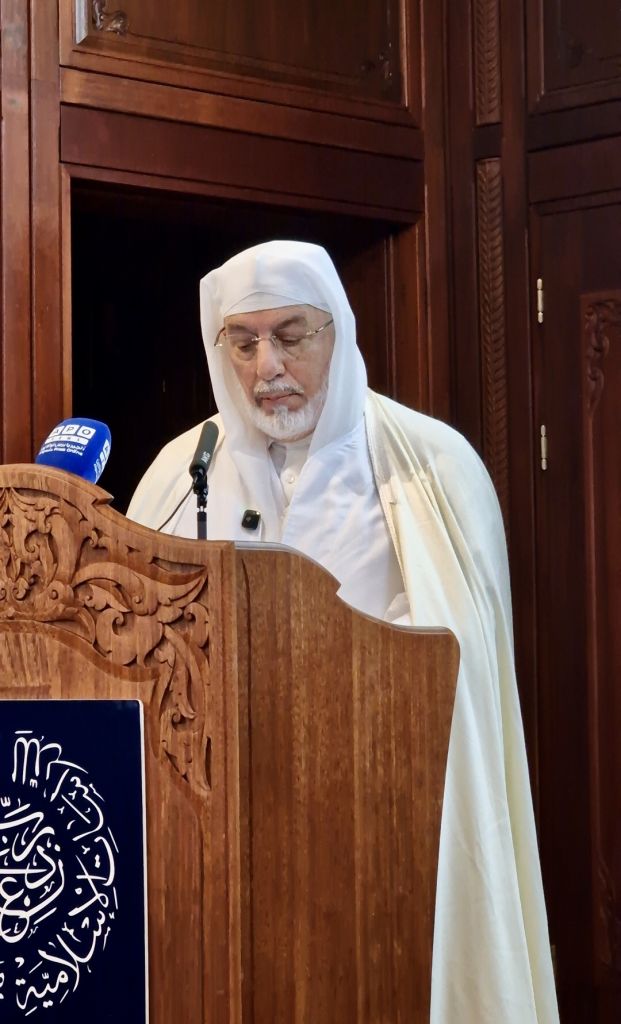
أصحاب المعالي والسّعادة،
حضرات السيّدات والسّادة الأساتذة والباحثين،
أسرة الإعلام،
أيّها الحضور الكريم، كلّ باسمه ومقامه.
السّلام عليكم ورحمة الله وبركاته، وبعد؛
فيسعدني أن ألتقي بكم مجدّدا، في اليوم الثّاني من مناسبة متميّزة، شهدت بالأمس الإعلان الرسميّ لإطلاق كرسيّ الأمير عبد القادر، وتوقيع الاتّفاقيّة المؤسّسة له، وتدشين فضاء يحمل اسم الجزائر، في هذا الصّرح العلميّ المرموق، في مركز أكسفورد للدّراسات الإسلاميّة.
لقد كان يوم الأمس مناسبة للاحتفاء بميلاد مشروع علميّ جديد؛ أمّا يومنا هذا، فهو يوم التأمّل في المعاني الّتي يحملها هذا المشروع، واستكشاف الآفاق الفكريّة والإنسانيّة الّتي يفتحها أمام الباحثين والطّلبة والأجيال القادمة.
ولعلّ أجمل ما في هذا البرنامج العلميّ، أنّه لا يكتفي باستحضار شخصيّة تاريخيّة من الماضي؛ وإنّما يحاول أن يجعل منها مدخلا للتّفكير في قضايا الحاضر، وأسئلة المستقبل. فالموضوعات الّتي ستُناقش خلال هذا اليوم، من إرث الأمير عبد القادر، إلى قضايا التّعليم العالي والبحث العلميّ؛ ومن العلوم والتكنولوجيا، إلى الاقتصاد والتّنمية والعلاقات الجزائريّة البريطانيّة؛ تبدو في ظاهرها متفرّقة؛ لكنّها تلتقي في جوهر واحد، ألا وهو البحث عن الشّروط الّتي تصنع نهضة الأمم، وتمنحها القدرة على الإسهام في الحضارة الإنسانيّة.
ومن هنا تبرز القيمة الخاصّة للأمير عبد القادر:
فالرّجل الّذي نجتمع اليوم لاستحضار إرثه، لم يكن بطلا فذّا، وقائدًا عسكريّا فحسب، ولم يكن عالما أو متصوّفا أو رجل دولة، بالمعنى التقليديّ لهذه الصّفات؛ وإنّما كان أنموذجا فريدا لوحدة هذه الأبعاد جميعا، داخل شخصيّة واحدة. ولذلك فإنّ دراسة الأمير عبد القادر ليست عودة إلى التّاريخ، بقدر ما هي بحث في تجربة إنسانيّة متكاملة، اجتمع فيها الفكر والعمل، والرّوح والسّياسة، والأخلاق والقوّة، والانتماء الوطنيّ والانفتاح الإنسانيّ.
إنّ الأمم تُخلِّد في ذاكرتها رجال الأحداث؛ أمّا الإنسانيّة فتحتفظ برجال الأفكار.
والأمير عبد القادر جمع بين المقامين؛ فقد كان من صنّاع الحدث في تاريخ الجزائر،
ومن صنّاع الفكرة الّتي تجاوزت حدود الجزائر إلى آفاق أرحب.
لقد ظهر الأمير في مرحلة كانت الجزائر تواجه فيها تحدّيا وجوديا غير مسبوق؛
وكان من الممكن أن ينحصر دوره في الجهاد وقيادة المقاومة، كما فعل كثير من القادة
عبر التّاريخ؛ غير أنّ نظرته كانت أبعد من ساحة المعركة، وأوسع من مقتضيات اللّحظة.
فمنذ السّنوات الأولى لتجربته الرّائدة، أدرك أنّ مقاومة الاحتلال لا تقتصر على حمل السّلاح، وإنّما تقتضي أيضا بناء المؤسّسات، وتنظيم المجتمع، وإرساخ الشرعيّة، وصناعة الوعي الجماعيّ. ومن هنا، نشأت تجربته في بناء الدّولة.
فلقد أسّس إدارة مركزيّة، ونظّم شؤون القضاء والماليّة، وأقام شبكات للاتّصال والإمداد، وأنشأ مصانع للأسلحة، ووضع أسسا للعلاقات الدبلوماسية مع القوى الدّولية والإقليميّة. وكان بذلك يؤسّس لأنموذج سياسيّ جديد في الجزائر الحديثة، يقوم على فكرة الدّولة المنظّمة، لا على مجرّد تجمّعات قبليّة، أو ولاءات متفرّقة محلّيّة.
ولهذا، فإنّ الأمير عبد القادر يحتلّ مكانة محوريّة في تاريخ تشكّل الشخصيّة الوطنيّة الجزائريّة: إذ إنّه نجح في تحويل الانتماءات المتعدّدة إلى مشروع جامع؛ وفي جعل الدّفاع عن الأرض والدّين والكرامة جزءا من وعي وطنيّ آخذ في التّرقي والامتداد.
وهكذا يظهر أنّ الدولة، عند الأمير، لم تكن مؤسّسات وسُلُطات فحسب؛ ففي تصوّره أنّ العمران يبدأ بالإنسان. ومن هنا يبرز البعد العلميّ في شخصيّة الأمير.
فلقد نشأ في بيئة علمية عريقة، وتلقّى علوم القرآن والحديث والفقه واللغة والمنطق والفلسفة؛ واطّلع على تراث الحضارة الإسلاميّة، في مختلف فروعه؛ ولم يكن العلم بالنسبة إليه زينة ثقافية، أو وسيلة للوجاهة الاجتماعية؛ وإنّما كان أساسا لتكوين العقل وصناعة الرؤية.
وحين نتأمّل سيرته، نجد أنّ المعرفة كانت حاضرة في جميع مراحل حياته؛ في القيادة، وفي الإدارة، وفي الكتابة، وفي التربية، وفي الحوار.
ولهذا، فإنّ إنشاء كرسيّ علميّ يحمل اسمه في أكسفورد، يبدو امتدادا طبيعيّا لمسار رجل، آمن بأنّ المعرفة هي الثروة الحقيقية للأمم؛ وأنّ الجهل أخطر على المجتمعات من الهزائم العسكرية نفسها.
وإذا كان البرنامج العلميّ لهذا اليوم يتضمّن جلسة مخصّصة للعلوم والتكنولوجيا والتعليم العالي، فإنّ في سيرة الأمير ما يذكّرنا بأنّ النهضة لا تُبنى بالقوّة المادّيّة وحدها، وإنّما تُبنى، قبل ذلك، بالعقل والعلم، والاستثمار في الإنسان.
أيّها الحضور الكريم؛
ومع أهمّية البعديْن الوطنيّ والعلميّ؛ فإنّ مفتاح فهم الأمير عبد القادر يظلّ كامنا في عالمه الروحيّ؛ فالرجل ينتمي إلى مدرسة صوفيّة سنّية عريقة، تشكّلت رؤيتها على أساس الجمع بين العلم والعمل والتزكية.
ومن دون فهم هذا البُعد، يصعب تفسير كثير من مواقفه الّتي بدت استثنائية في نظر معاصريه: فلقد كان الأمير ينظر إلى السّياسة، من منظور أخلاقيّ؛ وإلى السّلطة، بوصفها أمانة؛ وإلى الإنسان، بوصفه مخلوقا مكرّما من عند الله.
من هذا المنطلق، لم يكن اختلاف الدّين أو العرق أو اللّغة مبرّرا لإهدار الكرامة الإنسانيّة؛ ولهذا لم يكن موقفه في دمشق الشّام، سنة 1860م، حدثًا معزولّا في حياته؛ وإنّما كان، في تقديرنا، ثمرة طبيعيّة لتكوين روحيّ عميق، جعله يرى في حماية الأرواح واجبا دينيّا، قبل أن يكون التزاما سياسيّا أو إنسانيّا. ولعلّ الحادثة ستحظى، في ندوة اليوم، بقراءة تفكيكيّة لها، لفهم البواعث الحقيقية، الّتي حكمت هذا السّلوك الرّاقي للأمير، في ذاك السّياق.
وفي عالم اليوم، حيث يزداد التوتّر بين الهُوّيات والثقافات، تبدو تجربة الأمير شاهدا على قدرة القيم الروحية الأصيلة على صناعة السّلام وحماية الإنسان.
أيّها الحضور الكريم؛
من هذا البُعد الروحيّ نفسه، انبثقت رؤية الأمير للعلاقات الدّولية؛ فلقد عاش في القرن التّاسع عشر، وهو قرن التحوّلات الكبرى في النظام الدّوليّ الحديث؛ وتعامل مع قوى عالمية مختلفة؛ وخاض تجارب معقّدة في الحرب والسّلم، والأسر والمنفى، والحوار.
وقد مكّنته ثقافته الواسعة، ورؤيته الأخلاقية، من أن يتحوّل تدريجيّا إلى شخصيّة تحظى بالاحترام خارج حدود العالم الإسلاميّ.
ولذلك، فإنّ مكانته العالمية اليوم لا تستند فقط إلى دوره في مقاومة الاحتلال، وإنّما إلى ما جسّده من قيم إنسانية، جعلته محلّ تقدير لدى مفكّرين وساسة وقادة، من ثقافات متعدّدة.
ومن هذه الزاوية تحديدا، يكتسب إنشاء هذا كرسيّ الأمير عبد القادر في أكسفورد معناه الأعمق.
فالأمر لا يتعلّق بإحياء ذكرى تاريخية؛ وإنّما بإدماج تجربة فكريّة وإنسانية في النقاش الأكاديميّ العالميّ، حول الدّولة والأخلاق والدّين، والتعدّديّة والعلاقات بين الحضارات.
وهنا تتجلّى أيضا أهمّية العلاقات الجزائرية البريطانيّة، الّتي يشكّل هذا المشروع إحدى ثمارها الفكرية الراقية. فالعلاقات بين الدّول تبلغ أسمى صورها، حين تنتقل من المصالح الآنية، إلى الشراكات المعرفيّة؛ ومن التبادل الاقتصاديّ، إلى التبادل الفكريّ، ومن الحوار السياسيّ، إلى بناء الجسور بين المؤسّسات العلميّة والثقافيّة.
إنّ الكراسي العلمية، ومراكز البحث، وبرامج التعاون الأكاديميّ، هي من أكثر أشكال الدبلوماسية الثقافية استدامة وتأثيرا؛ وهي الّتي تسمح للأمم بأن تتعارف من خلال أفضل ما لديها من أفكار وقيم وتجارب.
ولهذا، فإنّنا ننظر إلى كرسيّ الأمير عبد القادر، باعتباره استثمارا في المعرفة، واستثمارا في الصّداقة بين الشعوب، واستثمارا في المستقبل الواعد، بإذن الله.
حضرات السّادة والسّيّدات؛
إنّ العالم المعاصر يواجه تحدّيات متزايدة، في مجالات السّلم والهُوّيّة، والتنمية والتعايش. وبين أيدينا تراث إنسانيّ غنيّ يضمّ نماذج قادرة على إلهام الأجيال الجديدة في مواجهة هذه التحدّيات.
والأمير عبد القادر واحد من تلك النماذج الكبرى: فلقد علّمنا أنّ القوّة تفقد معناها، إذا انفصلت عن الأخلاق؛ وعلّمنا أنّ الهُوّية تزداد رسوخا، حين تنفتح على الإنسانية؛ وعلّمنا أنّ المعرفة أساس العمران؛ وعلّمنا أن الرّوح، حين تسمو، تصبح مصدر بناء لا مصدر صراع.
ولهذا؛ فإنّ أفضل تكريم للأمير عبد القادر، لا يكون باستحضار أمجاده الماضية فحسب، وإنّما بمواصلة البحث في فكره، واكتشاف ما يزال كامنا في تجربته، من معانٍ قادرة على خدمة الإنسان في هذا العصر.
وإنّنا نأمل أن يصبح هذا الكرسيّ منارة علميّة دوليّة، ومجالا رحبا للبحث الرصين، ومنصّة للحوار الخلّاق بين الثقافات، وإضافة نوعية إلى مسيرة التعاون العلميّ بين الجزائر والمملكة المتّحدة، وإسهاما جديدا في خدمة المعرفة الإنسانية المشتركة.
بارك الله المسعى، وسدّد الخطى؛ ووفّقنا لما يحبّ ويرضى.
.والحمد لله ربّ العالمين
Speech of Minister of State Dean of Djamaâ El Djazaïr Sheikh Muhammad al-Ma’mun al-Qasimi al-Hasani during the conference organized on the occasion of the launching of El-Emir Abd-Elkader’s Chair.
In the name of Allah, the Most Gracious, the Most Merciful,
Director of the Oxford Centre for Islamic Studies, Excellencies,
Distinguished Faculty and Researchers, Members of the Media,
Honored Guests,
Peace, mercy, and blessings of God be upon you.
I am delighted to meet with you once again in this prestigious academic institution on the second day of this exceptional occasion, which yesterday witnessed the official announcement of the launch of the Emir Abdelkader Chair, the signing of its founding agreement, and the inauguration of “The Algeria Research Hall” at the Oxford Centre for Islamic Studies.
While yesterday served as an occasion to celebrate the birth of a new academic endeavor, today is a day for reflecting on the meanings this project embodies and exploring the intellectual and humanitarian horizons it opens for researchers, students, and future generations.
Perhaps the most compelling aspect of this scholarly program is that it does not merely evoke a historical figure from the past, but rather seeks to employ his legacy as a gateway for contemplating contemporary issues and future challenges. The themes scheduled for discussion throughout the day—ranging from the legacy of Emir Abdelkader to matters of higher education and scientific research, science and technology, economics and development.
Algerian-British relations—may appear disparate at first glance. However, they converge at a single core essence: the investigation into the prerequisite conditions that drive the renaissance of nations and endow them with the capacity to contribute to human civilization.
It is precisely from this perspective that the distinct value of Emir Abdelkader emerges. The man whose legacy we gather today to commemorate was not solely a military hero, nor was he merely a scholar, a Sufi, or a statesman in the conventional sense of any of these titles; rather, he represented a unique paradigm wherein all these dimensions harmoniously unified within a single persona. Consequently, the study of Emir Abdelkader is not a return to history as it is an inquiry into an integrated human experience—one that fused thought and action, spirituality and politics, ethics and power, nationalism and humanitarian openness.
Nations immortalize the architects of historical events in their collective memory, yet humanity preserves the architects of ideas. Emir Abdelkader embodied both statures. He was among the shapers of events in Algerian history, and equally among the architects of ideas whose resonance transcended the borders of Algeria into broader horizons. The Emir emerged at a historical juncture when Algeria was confronting an unprecedented existential threat. His role could have been confined to leading the armed resistance, as many commanders have done throughout history; however, his vision extended far beyond the battlefield and reached wider than the exigencies of the immediate moment. From the early years of his experience, he recognized that resisting occupation was not restricted to taking up arms, but fundamentally necessitated institutional building, societal organization, establishing legitimacy, and forging a collective consciousness. Thus emerged his state-building enterprise. He established a centralized administration, organized judicial and financial affairs, instituted communication and supply networks, founded munitions factories, and laid the groundwork for diplomatic relations with international and regional powers. In doing so, he was founding a new political paradigm in modern Algeria, one predicated on the concept of an organized state rather than mere tribal assemblies or fragmented local loyalties.
For this reason, Emir Abdelkader occupies a pivotal position in the historical formation of the Algerian national identity, having succeeded in transforming disparate affiliations into a unifying project, and rendering the defense of land, faith, and dignity an integral part of an emerging national consciousness. Yet, to the Emir, the state did not consist merely of institutions and authorities; in his conception, civilization begins with the human being. From this premise, the scholarly dimension of his character comes to light. Raised in a distinguished scholarly environment, the Emir studied the Quran, Hadith, jurisprudence, linguistics, logic, and philosophy, gaining deep familiarity with the various branches of Islamic intellectual heritage. Knowledge for him was neither a cultural ornament nor a means for social prestige; rather, it was the bedrock for cognitive formation and visionary insight. When contemplating his biography, we find that knowledge was ever-present across all stages of his life—in leadership, administration, dialogue, writing, and education. Therefore, the establishment of an academic chair bearing his name at Oxford appears as a natural extension of the path of a man who believed that knowledge is the true wealth of nations, and that ignorance is a greater danger to societies than military defeats themselves. If today’s academic program includes a session dedicated to science, technology, and higher education, there is much in the Emir’s life to remind us that a renaissance is not built on material power alone, but is fundamentally achieved through investment in the human being, the intellect, and science.
Honored Guests,
Notwithstanding the significance of both the national and academic dimensions, the key to understanding Emir Abdelkader remains anchored in his spiritual domain. The man belonged to an authentic Sunni Sufi tradition whose worldview was shaped by the synthesis of knowledge, action, and spiritual purification. Without grasping this dimension, it becomes difficult to interpret many of his stances, which appeared extraordinary to his contemporaries. The Emir viewed politics as a moral endeavor, authority as a sacred trust, and the human being as a creature dignified by God. From this standpoint, differences in religion, race, or language could never justify the violation of human dignity. Consequently, his historic stance in Damascus in 1860 was not an isolated incident in his life; rather, we perceive it as the natural fruition of a profound spiritual cultivation that led him to view the protection of lives as a religious duty before it was a political or humanitarian commitment. This event will likely undergo a analytical deconstruction during today’s symposium to comprehend the true motivations that governed this noble conduct within that specific historical context. In today’s world, marked by escalating tensions between identities and cultures, the Emir’s experience stands as a testament to the capacity of authentic spiritual values to foster peace and safeguard humanity.
Honored Guests,
It was from this spiritual dimension that the Emir’s vision of international relations emanated. Living in the nineteenth century—a century of major transformations in the modern international system—the Emir engaged with various global powers and underwent complex experiences in war, peace, captivity, exile, and dialogue. His vast erudition and ethical outlook enabled him to gradually transform into a figure held in high esteem far beyond the borders of the Islamic world. Thus, his global standing today rests not only on his role in resisting occupation, but on the human values he embodied, which earned him the appreciation of intellectuals, politicians, and leaders from diverse cultural backgrounds. From this precise angle, the establishment of this Chair at Oxford acquires its deepest meaning. It is not an a matter of a historical commemoration; rather, it is about integrating an intellectual and human experience into the global academic discourse surrounding the state, ethics, religion, pluralism, and civilizational relations. Herein lies also the significance of Algerian-British relations, of which this project represents one of the finest intellectual fruits. Relations between nations reach their highest expression when they transition from transient interests to knowledge-based partnerships, from economic exchange to intellectual exchange, and from political dialogue to building bridges between scientific and cultural institutions. Academic chairs, research centers, and scholarly cooperation programs constitute some
of the most sustainable and impactful forms of cultural diplomacy; they are the avenues that allow nations to know one another through the best of what they possess in ideas, experiences, and values. Therefore, we view the Emir Abdelkader Chair as an investment in knowledge, an investment in friendship between peoples, and an investment in the future.
Ladies and Gentlemen,
The contemporary world faces growing challenges in the realms of peace, identity, development, and coexistence. Yet we hold in our hands a rich human heritage encompassing models capable of inspiring new generations in confronting these challenges. Emir Abdelkader stands as one of those monumental models: he taught us that power loses its meaning when detached from morality; he taught us that identity grows more deeply rooted when it opens itself to humanity; he taught us that knowledge is the foundation of civilization; and he taught us that when the spirit elevates, it becomes a source of construction rather than a source of conflict. Therefore, the finest tribute to Emir Abdelkader is achieved not merely by invoking his past glories, but by continuing to research his thought and uncovering the meanings still latent within his experience that remain capable of serving humanity in this era. We hope that this Chair will become an international academic beacon, a vast arena for rigorous research, a platform for creative cross- cultural dialogue, a qualitative addition to the trajectory of scientific cooperation between Algeria and the United Kingdom, and a renewed contribution to the service of shared human knowledge.
Peace, and the mercy and blessings of Allied God, be upon you.
Peace, and the mercy and blessings of Allied God, be upon you.